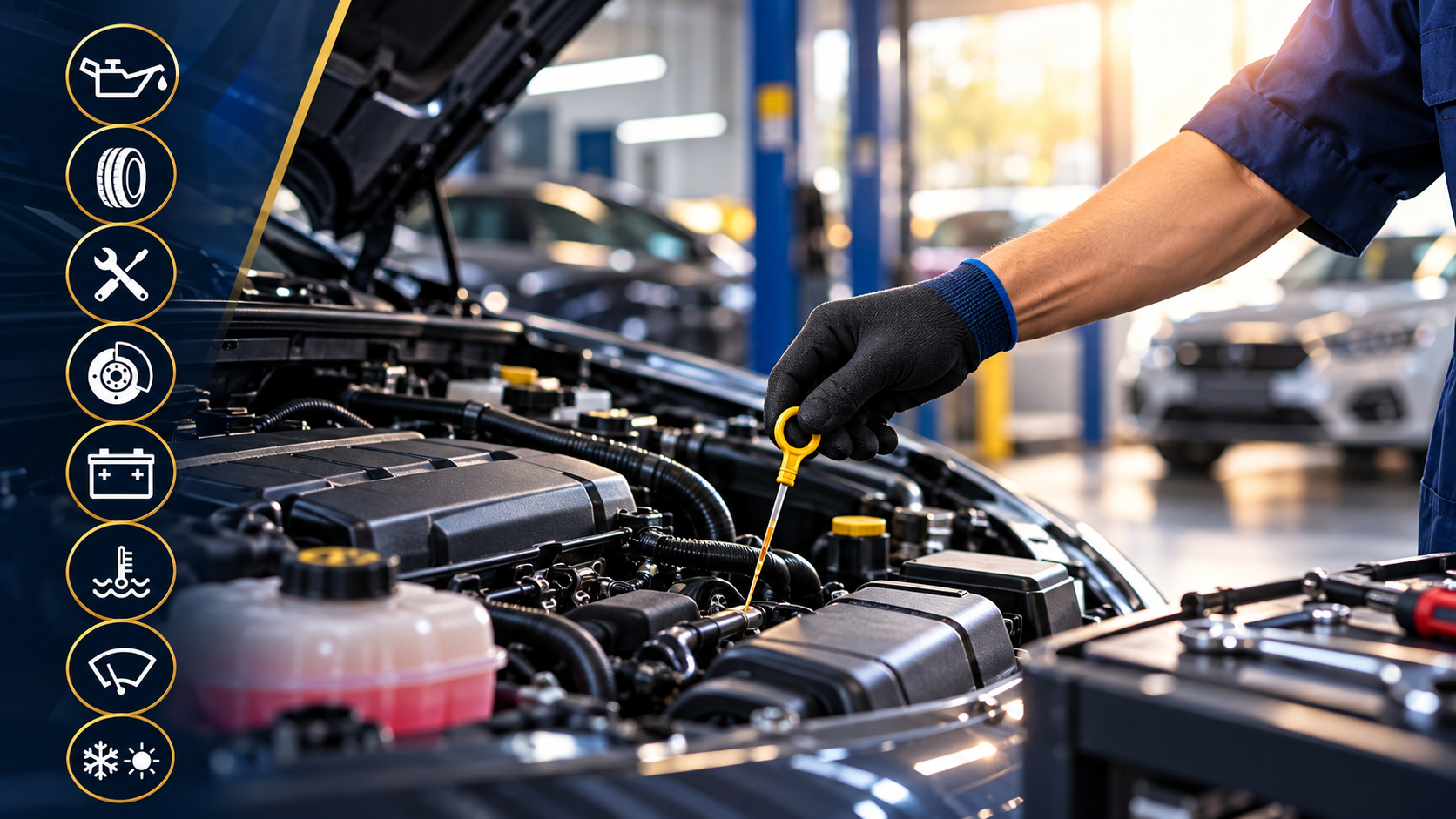
Buying a used car is only the beginning of your ownership journey. Regular maintenance and simple checks can help keep your vehicle reliable, safe and enjoyable to drive.
You do not need to be a mechanic to look after your car. A few straightforward checks, combined with regular servicing, can help identify potential problems before they become more expensive repairs.
Here are some practical car maintenance tips every driver should know.
1. Check your engine oil regularly
Engine oil is essential for lubricating the engine and helping its components operate correctly.
Check the oil level according to the manufacturer’s instructions and top it up with the correct specification of oil if necessary.
If you notice that your vehicle is regularly losing oil, it is worth having it inspected by a qualified technician.
2. Look after your tyres
Your tyres are the only part of your vehicle that is in direct contact with the road, so their condition is extremely important.
Regularly check:
- Tyre pressure
- Tread depth
- Uneven wear
- Cracks or visible damage
- The condition of the spare tyre, where fitted
Always use the recommended tyre pressures for your vehicle. These can usually be found in the owner’s handbook or on a vehicle information label.
3. Keep up with servicing
Following the manufacturer’s recommended servicing schedule is one of the simplest ways to maintain your vehicle.
Depending on the vehicle, servicing may include checks or replacement of items such as:
- Engine oil and filters
- Air filters
- Brake components
- Spark plugs
- Belts
- Fluids
- Battery
- Suspension components
Keep your service records and receipts somewhere safe. A clear maintenance history can also be useful when you eventually sell or part-exchange your vehicle.
4. Pay attention to your brakes
If you notice unusual noises, vibrations, pulling to one side or changes in brake pedal feel, do not ignore them.
Brake components naturally wear over time, so regular inspection is important.
If you are concerned about your brakes, arrange a professional inspection rather than waiting for the problem to become worse.
5. Check your warning lights
Modern cars use dashboard warning lights to alert drivers when something may require attention.
If a warning light appears, check your owner’s handbook for information about what it means.
Some warning lights require immediate attention, while others may indicate that the vehicle needs to be checked or serviced.
Never ignore a warning light simply because the car appears to be driving normally.
6. Look after your battery
A weak battery can leave you unable to start your vehicle, particularly during colder weather.
Watch for signs such as:
- Slow engine starting
- Dim headlights
- Electrical issues
- Battery warning lights
If your battery is several years old or you are experiencing starting problems, have it checked by a qualified technician.
7. Check your coolant and other fluids
Your vehicle relies on several different fluids to operate correctly.
Depending on your vehicle, these may include:
- Engine coolant
- Brake fluid
- Screenwash
- Power steering fluid
- Transmission fluid
Only top up fluids using the correct product specified by the vehicle manufacturer. Never open a hot coolant system, as it can be dangerous.
8. Replace worn windscreen wipers
Windscreen wipers are easy to overlook, but they are particularly important during wet weather.
If your wipers leave streaks, make excessive noise or fail to clear the windscreen properly, they may need replacing.
Also make sure your screenwash reservoir is regularly topped up.
9. Keep your car clean
Regular cleaning is not just about appearance.
Removing dirt, road salt and other contaminants can help protect the vehicle’s exterior. Cleaning the interior regularly can also help preserve seats, carpets and dashboard surfaces.
During winter, paying particular attention to areas exposed to road salt can be especially useful.
10. Follow a seasonal maintenance routine
Different seasons can place different demands on your vehicle.
Before winter, check your:
- Tyres
- Battery
- Windscreen wipers
- Screenwash
- Lights
- Coolant
During warmer months, check your air conditioning and keep an eye on engine temperatures, tyre pressures and fluid levels.
Small Checks Can Make a Big Difference
Good car maintenance does not always require complicated work. Regular checks, timely servicing and paying attention to changes in how your vehicle drives can all contribute to safer and more reliable motoring.
If you are unsure about a warning light, unusual noise or mechanical problem, it is always better to have the vehicle professionally inspected.
Looking After Your Next Used Car
At WV Motor Company, we understand that buying a used car is an important decision. Once you have found your vehicle, regular maintenance can help you enjoy it for many miles to come.